John F. Howard (Star-45 discussion forum, July 31, 2006)
"Gorilla Glue does foam a bit, but nothing like foam-in-a-can and has minimum stink. Forget trying to smooth things out, the foam is very, very sticky and keeps growing until it sets up (about an hour) at which point it will still be a little soft (keep clamped for 3-4 hours). Any squeeze/foam out once hard, can be cut, chiseled or sanded smooth. Run a strip of tape along the edge of the glue line and most of the foam out will end up on the tape. The best joints are tight ones that use a minimum of glue. For narrow or thin pieces (planking), squeeze out a little puddle (just enough to use in 15-20 minutes) and use a Popsicle stick to spread along the edges. Wear gloves, the stuff stains and is sticky. GG is great for laminating larger areas (spread with an old credit card or playing card)."
"If you use epoxy resin such as West Systems (best, you can adjust the cure rate with the different hardeners) or one of the 30-minute or longer (5-15 minute never gets hard and remains rubbery) such as sold by Great Planes or Tower, stink will not be a problem. The polyester resin does STINK in a big way, it what you can smell in a new fiberglass hull.
CA glues are ok for "tacking" stuff in place until the epoxy sets up, but watch the fumes. CA will fail if used in a wet location for long and also cause a problem with the wood accepting stain. Work with plenty of ventilation and or respirator and wear gloves with any of the above glues and resins, staining of the skin and sensitivity, either skin and or breathing can occur."
"These are base on my experience with the glues mentioned (full size boats, cabinet work and models). Yellow glue such as Titebond or Elmers Carpenter Wood Glue (not waterproof) works fine when encapsulated with epoxy (cedar strip canoe builders use it all the time)."
{ http://groups.yahoo.com/group/Star45/ }
Phil Geren adds a warning note about Glue Fumes:
I have a serious allergic reaction to CA fumes - causes fluid to build up in the lungs, like pneumonia. I still use it, but with a fan blowing air between me and the work. Trying to avoid it.
Phil Geren on Gorilla Glue:2006 August 1
Is it rock hard or rubbery when dry?
I bought some, but have the same reservations as Dave M about foaming, trimming, and sanding. If it doesn't sand well, the finished product won't be as good as what I am aiming for.

7/14/2006
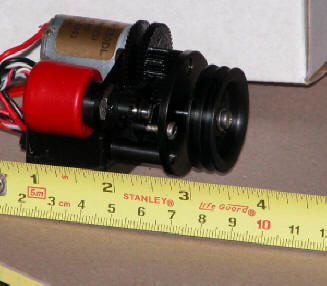
Masts for Star 45 R/C model sail boat
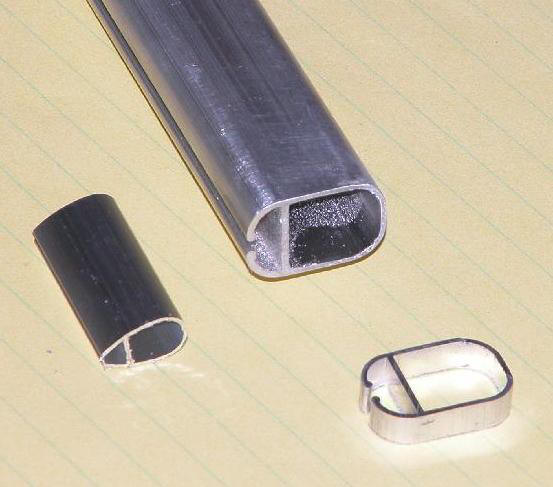

photo's courtesy of "Larry Ludwig" at www.LudwigRCYachts.com, Ludwig Mfg.
Mast Fittings for Star 45 R/C model sail boat


John Fisher's mast jack is pretty simple. He made a fitting that went in the bottom of the mast that was threaded 8-32. Then He cut down a brass nut from Lowe's and soldered it to a 8-32 bolt. This fits into the mast step and threads into the bottom of the mast. He is going to add a jam nut since the rig seemed to slowly lose tension as he sailed. The lock nut will be another cut down brass nut or a pc of 1/16 aluminum that is threaded 8-32.
Now John's parts are pretty fancy and without a lathe and CNC mill would be hard to make. The quick and easy way to make the same parts is to glue a wood block into the bottom of the mast, then use a blind nut as the thread for the mast jack. JB weld bonds well to aluminum and I would recommend it for gluing in the wood block.
For rig adjustment John would set the shrouds just tight enough that I had to undo the jib from the deck to move the rig. So he gets the shrouds set to have the mast straight, then put it in the right position for the wind speed, then add tension by unscrewing the mast jack. By having the rig set up this way you do not need to adjust your shrouds when moving the rig fore or aft or to change the tension in the forestay.
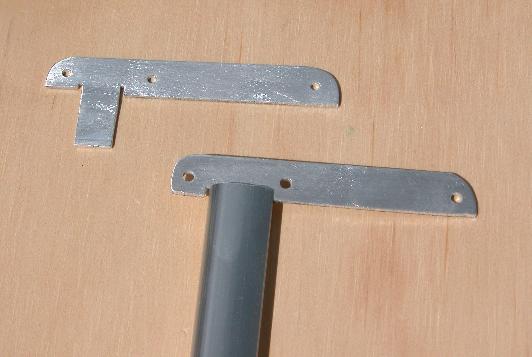
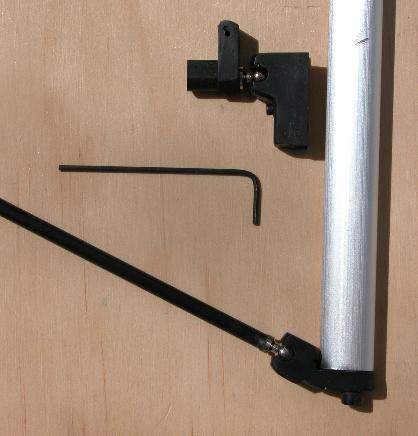
Here are som eother fittings courtesy of "Larry Ludwig" at www.LudwigRCYachts.com, Ludwig Mfg.

7/09/2006
GRP, Vacuum bagging, Fiberglass, Carbon Fiber , Dynel
Stuff you need to know:
Breather fabric is a lightweight, polyester blanket that provides excellent air passage within the vacuum envelope while it absorbs excess epoxy.
60" wide x 2.7 yd, 60" wide x 10 yd. 60" wide x 200 yd rolls:
Release Fabric is a tough, finely woven nylon fabric treated with a release agent. It is used to separate the absorber, breather and vacuum bag from the laminate in vacuum bagging operations. Excess epoxy bleeds through and is peeled from the cured laminate along with the release fabric. Peels easily and leaves a smooth textured surface, ready for bonding or finishing. 60" wide x 2 yd,. 60" wide x 10 yd rolls
Vacuum Bag Film is a Clear, heat-stabilized, modified nylon resin film, tough, stretchable film for high vacuum pressures. 60" wide x 2 yd, 60" wide x 10 yd,60" wide x 20 yd. 60" wide x 333 yd rolls:
Vacuum Bag Sealant; a mastic tape sealant for airtight seals between vacuum bags and molds. Easy to work with around difficult angles, patching small leaks in the system. 1/2" wide x 25' rolls:
Techniques Book on Vacuum Bagging, West System publishes this definitive guide to the principles and application of vacuum bagging techniques for laminating composite materials
with epoxy.
Fiberglass Mat is a Chopped Strand Fiberglass Mat, Offers great conformability with low cost.
Veil Mat 0.09 oz/sq ft
Fiberglass Mat, 3/4 oz/sq ft, 1.5 oz/sq ft, 2.0 oz/sq ft
Fiberglass Cloth 4-, 6- and 10-oz per square yard.
Dynel Fabric is a popular laminate fabric with great abrasion resistance used for museum-quality restoration work on wooden boats. It's strong and supple like a true woven fabric, with no fibers to irritate your skin.
Size Weight, 5 oz
Carbon Fiber lightweight, strong composite can strengthen any project while adding minimal weight.
Plain Weave 5.8 oz
Twill Weave 5.8 oz
Unidirectional 9 oz
Carbon Fiber Tape a unidirectional reinforcing tapes are used
to improve tensile strength and stiffness in one direction with minimal weight.
--
You can learn a lot about boat building by reading catalogs for example: www.jamestowndistributors.com/
Many of the same materials are also used in model boat building.
The Jamestown site has several links to model builders, AMYA and other organizations
7/06/2006
Star 45 R/C model sail boat Hulls, tips tricks | Class rules
Billie Geisler's comments on building Cedar Hulls,2006 August 1:
I build hulls from cedar rather than balsa. I find a clear, straight grained dog-eared fince picket at Lowes, Home Depot, etc. I cut the rough edges and flats off with a 10 inch table saw, rough cut the planks for the hull, then use a 3 inch table saw from Micro- mark to cut the final planks. I think that cedar is stronger than balse, and I don't think it soaks up as much epoxy. Epoxy is weight. My hulls weigh about the same as a fiberglass hull, and don't oil can.
The plastic sacks that the newspaper is in when it hits your drive is useful as gloves. The epoxy doesn't disolve them. Also, you can cut up the newspaper plastic sack and use to keep the hull from sticking to your clamps. These sacks are also good for picking up dog crap off your lawn, or any other nasty stuff. Just check for holes before using. :-)
AMYA Star 45 Class Rules, 2006, 1.0 Hull:
1.1 The Star 45 Class establishes as their approved plans a set of lines and drawings as the approved reference and construction plans for the class. These plans are scaled and appropriately modified for the use of modelers building a 45-inch model of the Star Boat. Existing plans supplied by kit manufacturers, etc. are grandfathered. New molds, plugs and scratch built models shall conform to the approved plans and specifications.
1.2 Hull length will be 45 inches (plus or minus one half (1/2) inch overall. (NOTE: this does not include any chain plate for backstay attachment, or 1/4 inch bow bumper if used. However, if the chain plate is attached to the transom or overhangs the transom, it may not extend beyond the transom more than 3/8 of a inch.) Hulls may not be less than 11 inches nor exceed 12 inches in beam when measured at the widest point on the deck. (Rubrails are not included in measuring but will not exceed 1/4 inch of thickness/width.)
1.3 In the event of a builder choosing to scratch or hand build a Star 45 Yacht, the builder must adhere to the class approved reference and construction drawings, as obtained from the AMYA Ships Store, as in the builders ability. A second consideration in scratch building is to ensure that safe and sound building practice be maintained.
1.4 All hulls will be constructed of wood or fiberglass or a combination of wood and fiberglass and be a minimum of 16 ounces when weighed before attachment of the deck and keel. This weight must be
verified by another member of the Star 45 Class using the Class Measurement Form.
1.5 Decks shall be constructed of wood, fiberglass or plastic laminate material.
1.6 All hulls shall be the standard hard-chine hull. Hulls may be built with a sheer at scale height or with a sheer no more than one inch higher than scale (when measured at the point of maximum depth of sheer.)
1.7 All fiberglass and wood hulls will have a name plate permanently attached to the inside of the hull so as to be seen when the hatch cover is removed.
1.8 At or before its first Sanctioned Regatta the newly built model yacht must be measured using, as reference, the approved measurement form and signed by not less than the owner of the model yacht and one other member of the class. This measurement form shall become, with the registration card, a permanent record of this model yacht.
1.9 The AMYA Star 45 Class recognizes and approves the molds and manufacturer and/or kit packagers of Star 45 molded hulls and kits in existence at the time of approval of these specifications. These sources will be approved sources for the class. New manufacturers will be directed to submit the first of their product to the Class Secretary for approval.
1.10 No maximum weight is specified, however, no yacht will weigh less than 12 pounds when fully rigged ready to sail. This means with all gear, rigging, sails, radio components, batteries and ballast placed and secured on board.
1.11 Bow Bumpers are mandatory for all class registered STAR 45 yachts. Bow bumpers are limited to three eight's of an inch (3/8") overhang. Bow bumpers shall be excluded in the overall length measurement, whether recessed in or otherwise attached to the bow stem. Bow bumpers must be of resilient fabrication to minimize damage to another yacht in the event of a collision.
Star 45 R/C model sail boat | DECK
Phil Geren on Staining Wood Deck Materials:
I was planning to stain planks prior to assembly, then use CA first, to get things fitted together and in place, then cover with 0.25 oz. fiberglass cloth and "thinned" (MEK or IPA) epoxy. Flex Coat epoxy people (fishing rod mfgrs) recommend heating the epoxy surface with a heat gun (hot air) prior to it's hardening, to release bubbles and smooth the surface, like what you see on fine fishing rods.
AMYA Star 45 Class Rules, 2006, DECK
8.1 Deck construction shall be limited to wood, plywood, fiberglass reinforced plastic or plastic
laminations (Formica). It may be covered with any material. Thin plastic films, such as MonoKote,
are not allowed for decks except as coverings.
8.2 Hatches are not restricted in size, location, number or style, as long as deck strength and
integrity are maintained.
Subscribe to:
Posts (Atom)